Lesson 17 of 33 · Islamic books
The Admonitions of Shaykh al-Islam Ibn Taymiyyah
Medium 1306 subtitle lines 1:21:13
…
Waiting for the first line…
You are listening to the Book of Sermons by Sheikh al-Islam Ibn Taymiyyah
Collected by Salih Ahmad al-Shami
Voiced by Islam Adel
In the name of Allah, the Most Gracious, the Most Merciful
Introduction
Praise be to Allah, Lord of the worlds, and may the best of blessings and most perfect peace be upon our master Muhammad, who was sent as a mercy to the worlds, and upon all his family and companions
And furthermore
Those who had the great influence in guiding it towards goodness with a kind word and good counsel
Those calling to Allah the Exalted with knowledge and insight
They are the beacons of reform and lamps of guidance
Our scholar in this issue is one of the heroes of this field and among those who pioneered in it
Who did not limit themselves to giving their advice to the common people
But they went beyond that to reach the rulers and leaders with the word of truth and guidance
He is one of the pillars of Jihad in its two arenas: the arena of thought and knowledge, and the arena of fighting in the Jihad against the enemies of Islam
He is the Imam, Sheikh al-Islam Ibn Taymiyyah, whose life was filled with tireless work that knows no fatigue
In the path of elevating the word of truth, calling to it, and fighting innovation, falsehood, and ignorance
His life was full of clarifying the ignorance of the ignorant and the half-educated
The matter that made them resent him
So he endured from them what he endured
Until they caused him to be imprisoned repeatedly
It seems that prison in the life of this great reformer
Was nothing but a period of rest and relaxation
In which he was alone with himself
And devoted himself to worship
So when he exited
He exited with renewed activity and high spirits
Rather, he mentions in one of his letters
Which he sent from prison to some of his loved ones
That he is in a state of spiritual sweetness and clarity that he did not reach outside the prison
It is appropriate for us to mention the introduction of this letter
He said in his letter to his companions while he was in Alexandria prison
In the name of Allah, the Most Gracious, the Most Merciful
And as for the favor of your Lord, report it
And regarding what I inform the group of, may Allah make it good for them in this world and in the Hereafter
And complete for them His apparent and hidden blessings
For I, by Allah the Great, the One besides Whom there is no god
Am in blessings from Allah such as I have never seen in all my life
And Allah, glory be to Him and exalted be He, has opened the doors of His bounty and His blessing
And the treasures of His generosity and His mercy
That which was not in mind
Nor did it cross the imagination, which the eyes fall short of
Allah the Almighty facilitated it until it became settled places
And some of this is known by taste
For those who have a share of the knowledge of Allah, His oneness, and the realities of faith
And what is the goal of the first and the last regarding knowledge and faith
For the pleasure, joy, happiness, pleasant time, and bliss which cannot be expressed
Is only in the knowledge of Allah, glory be to Him and exalted be He, His oneness, and faith in Him
And the opening up of the truths of faith and the Quranic knowledge
As some of the sheikhs said, 'A state would pass over me in which I would say: If the people of Paradise are in this state, they are truly in a good life.'
And this great reformer directed his efforts toward correcting beliefs
And toward returning to the methodology of the predecessors
And the sermons that I place in your hands
Are excerpts from his long statements in his discussions of issues
Or his treatment of topics he was asked about
And he did not present them as sermons, as is the case with many of the scholars of this nation
And they are models of what he presented in the fatwas
I selected them while referring to this valuable book
Hoping from Allah the Almighty that He benefits me with them and benefits every reader of them
And may Allah bless our master Muhammad and his family and companions and grant them peace
And our final call is that praise be to Allah, Lord of the worlds
Written by Salih Ahmad al-Shami
Biography of Imam Ibn Taymiyyah
He is Shaykh al-Islam Taqi al-Din Abu al-Abbas Ahmad ibn Abd al-Halim
Ibn Abd al-Salam ibn Abd Allah ibn Taymiyyah al-Harrani al-Hanbali
He was born in Harran in the year 661 AH
And he came with his father and family to Damascus
They had left the lands of Harran as migrants due to the tyranny of the Tatars and arrived in Damascus in the year 667
His pursuit of knowledge
He heard Hadith from its leading scholars in Damascus
He heard the Musnad of Ahmad several times, the Major Mu'jam of al-Tabarani, and other major books and collections
He took a great interest in Hadith and read many books himself
He dedicated himself to listening (to Hadith) for many years
He copied, selected, and learned calligraphy and arithmetic in school
He busied himself with the sciences and memorized the Quran
And he turned his attention to Jurisprudence
He studied Arabic for days under Ibn Abd al-Qawi, then he understood it
He began to study the book of Sibawayh until he understood it
He excelled in grammar and turned his attention to exegesis (Tafsir) completely
Until he attained precedence in it
And he mastered the principles of jurisprudence
All of this while he was only in his teens
The virtuous scholars marveled at his extreme intelligence, the fluidity of his mind, the strength of his memory, and the speed of his comprehension
That is what those who wrote his biography said about his early life
As for his character, they said that he grew up in total chastity, purity, and devotion
And moderation in clothing and food
He remained upon that good character, righteous to his parents, pious, god-fearing, devout, ascetic, fasting, and praying
Remembering Allah in every matter and in every situation
Ever-returning to Allah the Exalted in all circumstances and issues
Adhering to the limits of Allah the Exalted, His commands, and His prohibitions
Enjoining good and forbidding evil
Empty of the desires of food, clothing, and sexual intercourse.
He had no pleasure in anything other than spreading knowledge and teaching it.
The position of Chief Judge and the Sheikhdom of Sheikhs were offered to him, but he did not accept them.
He accepted his father's teaching positions when he was twenty-one years old.
His father was one of the major Hanbalis and their leaders.
He taught after him, so his matter became famous and his reputation spread throughout the world.
He had not yet reached thirty years of age when he became one of the greatest scholars of his time.
Rather, the greatest scholar of his time.
His soul could hardly get enough of knowledge, nor could it be satisfied with reading.
It did not get bored of working, nor did it get tired of researching.
It was rare for him to enter a branch of knowledge without other branches being opened for him from that branch.
He corrected things in that field for the experts of its people.
He used to attend councils and gatherings in his childhood.
He would speak, debate, and silence the elders.
He would bring forth that which would cause the notables of the city to be bewildered by it.
He began compiling and authoring when he was about seventeen years old.
The leadership in knowledge, action, asceticism, and piety reached him.
And courage, generosity, humility, forbearance, patience, majesty, and dignity.
And enjoining good and forbidding evil, along with honesty, trustworthiness, chastity, and protection.
And good intention, sincerity, supplication to Allah Almighty, and intense fear of Him.
And constant awareness of Him, adherence to the command, calling to Allah Almighty, good morals, benefiting people, and doing good to them.
He, may Allah have mercy on him, was a drawn sword against the opponents.
And a thorn in the throats of the people of desires and innovators.
And an Imam standing to explain the truth and support the religion.
The cities resounded with his mention, and the ages were stingy to produce the likes of him.
The Imam's Jihad and his trial.
The trial of Sheikh al-Islam began when his tools were completed and his fatwas became widespread.
In issues from which his envious rivals found an entry point against him.
They debated him, accused him of disbelief, accused him of innovation, and the rulers detained him and exiled him.
It was since the year six hundred and ninety-nine that his political personality appeared in the country.
The nation began to rely on him to repel its enemies during the Ghazans' turn.
He took upon himself the burdens of the matter, met with his deputy, and stood bold against the Mongols.
He headed after that a year later to the Egyptian lands.
When the matter intensified in the Levant because of the Mongols,
He sought the help of the state's pillars and urged them to perform Jihad.
Then he returned after days to Damascus.
His concern for the Jihad against the Tatars became evident,
As well as his inciting the princes to that until the news arrived of their departure.
And his commendable stance in the battle of Shaqhab in the year 702.
His meeting with the Caliph, the Sultan, and the people of influence and authority,
And inciting them to Jihad.
Then his heading at the end of the year 704 to fight the Kesrawani people and eradicate them.
Then his debate with the dissenters in the year 705 in the councils that were held for him in the presence of the Deputy of the Sultanate, Al-Afram.
His victory over them with argument and clarity, and their return to his opinion, willing or unwilling.
Then his heading after that in the mentioned year to the Egyptian lands in the company of the Chief Judge of the Shafi'is.
They held a council for him upon his arrival in the presence of the judges and the notables of the state.
Then his imprisonment in the pit at the Citadel of the Mountain, with his two brothers, for a year and a half.
Then his release after that.
And they held a council for him in which he prevailed over his adversaries.
Then they held a council for him in the year 707 regarding his speech on the way of the Unionists.
Then the order to deport him to the Levant by post.
Then the order to return him from a stage.
And his imprisonment in the citadel's jail for a year and a half.
Then his release from it and his heading to Alexandria and putting him in a tower where he was imprisoned for eight months.
Then his heading to Egypt and his meeting with the Sultan in a council that included the judges and the prominent princes,
And his honoring him greatly and consulting him on killing some of his enemies, and the Sheikh's refusal of that.
Then his residence in Cairo, then his heading to the Levant.
Then his staying in Damascus to spread the sciences, author books, and issue religious rulings to the people,
Until he spoke on the issue of swearing by divorce.
Some judges advised him to stop issuing rulings on it in the year 718.
He accepted his signal to avoid discord.
Then a decree came from the Sultan days later forbidding issuing fatwas on it.
Then the Sheikh returned to issuing fatwas on it and said,
It is not permissible for me to conceal knowledge.
He remained like that for a period until they imprisoned him in the citadel for five months and eighteen days.
He did not cease his habit of busy work and teaching.
Until they found an answer of his regarding the issue of traveling to the graves of prophets and righteous people.
And he had answered it about twenty years ago.
So they maligned him because of that.
The Sultan's decree arrived in Shaban in the year 726 to place him in the citadel.
A nice hall was cleared for him, and he resided in it with his brother serving him.
He wrote many volumes on the issue for which he was imprisoned.
Some of what he wrote appeared and became famous.
The matter led to him being forbidden from writing and reading.
And what he had of books was removed.
Neither an inkwell, nor a pen, nor a paper was left for him.
And he wrote after that with coal.
The removal of books from his possession was among the greatest of hardships.
He remained for months in that state and turned to recitation, worship, and night prayer until death came to him.
This is a summary of what was said about the state of Sheikh al-Islam.
Despite his enemies' attempts to make his life miserable, he persisted in every time to write.
He authored three hundred volumes, all of which are in Islamic law.
And in solving difficult issues of religion.
We read in what reached us from them an example of his precious knowledge.
And his work that the centuries have been unable to produce the like of.
His writings were numerous because he used to write from his memory.
He memorized the Book and the Sunnah and what was recorded in their commentaries.
And what the scholars said in their interpretation.
His vast memorization, the flow of his thoughts, and the breadth of his eloquence helped him.
To record truths that no other scholar was able to write like him on their subject.
Even if he had only Minhaj al-Sunnah
It would have been enough of an everlasting pride for him over time
For it contains an example of his knowledge and the strength of his argument
And his knowledge of religions and sects
And if we say that its equal has not been authored in refutation of those who oppose the people of Sunnah
Every fair-minded person among the people of the Qibla would believe us
The book Minhaj al-Sunnah is one of the truest testimonies to his high status in the knowledge of Sharia
And what he went through
And the futile attempts of some people of innovation to tamper with it
And in what both supporters and opponents have brought forth of sound opinions and false ones
It was a testament to his vast comprehension of the history of Islam and the history of religions and sects
And if we claimed that no scholar has come like him who knows what has happened to the religion and its followers' sects hour by hour and day by day, no one would be able to refute our claim
He refuted the Mu'tazila, the Jahmiyyah, the Shia, the philosophers, and others
He brought forth amazing opinions that he extracted from the spirit of the Sharia and deduced through his foresight and deep research
It was not written for any of the Imams in his time or after his time to contradict him and refute his sayings
And no voice of any religious scholar was heard in his time like his voice
And in establishing the truth and supporting the authority of Islam
Ibn Taymiyyah was in the second half of his life a brilliant lamp
He extinguished with his knowledge and actions the fame of the masters of appearances among the judges and scholars
And he was the foremost leader whenever he entered into a religious or political subject
And in vain the Shafi'is and Malikis tried to hand him over to the commoners
So that they might kill him
But they could do no more than restrict his freedom for months in a prison
And kings used to protect him from the fanaticism of his opponents and raise his status
King Al-Nasir, ruler of Egypt, raised the status of Ibn Taymiyyah significantly
And he wanted to kill the scholars who issued fatwas to depose him
And he urged him to give him a fatwa to kill some of them
But he refused that any of them should be harmed
And he said to him, If you kill these, you will not find the likes of them after them
He replied to him, They have harmed you and tried to kill you many times
The Sheikh said, 'Whoever harms me is forgiven,'
And whoever harms Allah and His Messenger, then Allah will take revenge on him.
I do not seek victory for myself.
And he kept at it until the Sultan showed him forbearance and pardoned him.
The Maliki judge, Ibn Makhluf, used to say,
We have not seen the likes of Ibn Taymiyyah; we incited [others] against him,
Yet we could not defeat him, and he had power over us,
But he pardoned us and argued on our behalf.
So based on this, Ibn Taymiyyah and his opponents say,
It is necessary to restrict him if he is not to be killed,
Otherwise, his disbelief has been proven.
And we say,
That this is the great difference between his morals and the morals of his provocateurs.
They were among those who were concerned with their worldly life and their outward appearances,
While he was concerned only with the hereafter, and there is a vast difference between the two pursuits.
He was concerned with spreading the religion and eliminating innovations with his heart, his tongue, and his pen.
And their concern was that the Sultan would be pleased with them so that he would keep them in their positions,
And to sway the common people so that they would kiss their hands.
Al-Dhahabi said,
He was fair-skinned with a black head and beard, with little grey hair, and his hair reached his earlobes.
It was as if his eyes were speaking tongues, of medium height among men, broad-shouldered, with a booming voice and eloquent.
He was a fast reader, and he would have outbursts, but he would overcome them with forbearance.
He said he would have outbursts in debate and anger, which would sow enmity in souls towards him.
His death in prison.
Al-Hafiz Ibn Rajab said: The Sheikh remained detained in the citadel from Sha'ban in the year 26 until Dhu al-Qi'dah in the year 28, then he became ill for twenty-odd days. Most people did not know of his illness, and nothing shocked them but his death.
He passed away at dawn on Monday, the twentieth of Dhu al-Qi'dah.
The muezzin of the citadel announced it from the minaret of the mosque, and the guards spoke of it on the towers.
People heard the news, and people gathered around the citadel, including the people of Al-Ghuta and Al-Marj.
A group of the greatest righteous people and scholars, such as Al-Mizzi and others, washed his body.
The Sheikh was brought out to the Mosque of Damascus, and they prayed over him at Dhuhr [noon prayer].
It was a monumental day, the likes of which Damascus had never seen.
A crier shouted, 'This is how the funerals of the Imams of the Sunnah are!'
People wept profusely.
He was brought out from the Bab al-Barid, and the crowd intensified.
The coffin was carried above people's heads, moving forward one moment and backward the next.
His funeral procession exited from the Bab al-Faraj.
The people crowded at all the city gates to exit.
The situation became immense at the Horse Market.
He was buried at the time of Asr in the Sufi cemeteries.
Those who attended his funeral were estimated at two hundred thousand.
And among the women, fifteen thousand.
May Allah have mercy on him and be pleased with him.
Testimonials
It has become my custom in this series to place this section in the translation,
to clarify the status of the one being translated.
If I were to convey everything that was said about Imam Ibn Taymiyyah, the chapter would be long.
But I will mention a little of what was said, which is evidence of what they left behind.
Al-Hafiz al-Dhahabi said,
Our Sheikh, the Sheikh of Islam, peerless in the era in knowledge, cognition, courage, intelligence, divine illumination, generosity, sincerity to the Ummah, enjoining good, and forbidding evil.
He heard Hadith, sought it extensively himself, wrote, compiled, researched the narrators and generations, and attained what no one else attained.
He excelled in the interpretation of the Quran and delved into its subtle meanings with a flowing nature and a mind keen on places of complexity.
He derived from it things no one had been preceded to.
He excelled in Hadith and its memorization; few could memorize what he memorized of the Hadith attributed to its sources, along with his strong ability to recall it when presenting evidence.
He surpassed people in the knowledge of Fiqh, the differences between schools of thought, and the fatwas of the Companions and the Successors.
So that when he issued a fatwa, he would not be bound by a school, but rather by what the evidence established for him.
He mastered the Arabic language in its roots, branches, reasoning, and variations.
He examined rational sciences, knew the sayings of the theologians, and refuted them.
He championed the Sunnah, and he is too great for someone like me to draw attention to his biography.
If I were to take an oath between the Rukn and the Maqam, I would swear that I have never seen with my own eyes the likes of him.
And that he had never seen the likes of himself.
He said, 'He was such that it could be truly said of him: Every Hadith that Ibn Taymiyyah does not know is not a Hadith.'
The Hafiz al-Zamalkani said,
'When he was asked about a field of knowledge, the observer and the listener would think that he knew nothing else but that field.'
And he judged that no one knew the likes of him.
And when jurists from all sects sat with him,
They benefited from him in their own schools of thought what they had not known before that.
And it is not known that he debated anyone and was bested by him.
And he did not speak in any science of the sciences, whether it was from the sciences of the Sharia or others,
Except that he surpassed its experts in it.
And the conditions of Ijtihad were combined in him in their proper manner.
The Hafiz Ibn Sayyid al-Nas said,
'I found him to be someone who had attained a share of the sciences,'
'And he would encompass the Sunnahs and the traditions by memory.'
'He excelled in every field over his peers.'
'And no eye that saw him has ever seen his like,'
'And his own eye never saw the like of himself.'
The Sheikh Imad al-Din al-Wasiti said,
He said, after beautiful praise, the wording of which is:
'By Allah, then by Allah, then by Allah,'
'There has not been seen under the vault of heaven the likes of your Sheikh Ibn Taymiyyah,'
'In knowledge, action, state, character, and following,'
'And in standing up for the right of Allah when His sanctities are violated.'
'He is the most truthful of people in conviction and the soundest of them in knowledge,'
'And the most perfect of them in following His Prophet, may Allah bless him and grant him peace.'
'We have not seen in this age of ours anyone who manifests the Muhammadan Prophethood and its Sunnah through his words and actions except this man.'
'The sound heart bears witness that this is the following in truth.'
And Sheikh Ibn Daqiq al-Eid said, 'I saw a man who had all the sciences before his eyes; he takes from them what he wishes and leaves what he wishes.'
And the Hafiz al-Mizzi said, 'I have not seen his like, and he did not see the like of himself.'
And I have not seen anyone more knowledgeable of the Book of Allah and the Sunnah of His Messenger,
And more following of them than him.
And Sheikh Abu Abd Allah ibn Qawam said,
Our knowledge has not been established except at the hands of Ibn Taymiyyah.
And the Hafiz Ibn Rajab al-Hanbali said,
The scholars, the righteous, the soldiers, the leaders, the merchants, and the rest of the common people loved him,
Because he was dedicated to benefiting them night and day with his tongue and his actions.
These sermons,
Imam Ibn Taymiyyah was not a preacher in the commonly understood sense,
Meaning that he held a session to preach to people, and that was not reported from him.
Rather, he was an imam and mujtahid in his knowledge, verifying issues and issuing legal rulings.
Just as he was a reformist imam who directed his attention to spreading the religion and fighting innovations,
And enjoining good and forbidding evil,
Just as he struggled against the enemies of Islam with his pen and his sword.
Therefore, applying the term 'sermons' to these selected words,
Is only applying it in the broad sense,
Which includes advice and exhortation,
And correcting concepts and clarifying the ambiguous,
And establishing the foundations of issues,
And not in the specific sense that means softening of the heart.
They are words I selected while referring to the book of Fatawa,
And I loved for them to take their place in the 'Landmarks in Education and Da'wah' series,
Hoping that God Almighty will benefit us with them.
And I intended good, so I hope that I have been successful in it.
And may God bless our master Muhammad, and his family and companions, and grant them peace.
Sermons of Sheikh al-Islam Ibn Taymiyyah.
Wisdom and exhortation are among the causes of the heart's righteousness and its healing.
The actions of the hearts,
Abu al-Abbas said,
The actions of the hearts, which may be called 'the stations' and 'the states',
Are among the foundations of faith and the rules of the religion,
Such as the love of God and His Messenger, reliance upon God, sincerity of religion for Him, gratitude to Him, patience with His decree, fear of Him, hope in Him, and what follows that.
These actions are all obligatory for all of creation, by the consensus of the religious leaders.
The foundation of the religion.
Abu al-Abbas said,
Sincerity is the reality of Islam.
Since Islam is the submission to Allah and not to anyone else.
So whoever does not submit to Allah has indeed shown arrogance.
And whoever submits to Allah and to someone else has indeed committed polytheism.
And both arrogance and polytheism are the opposite of Islam.
And for this reason, the head of Islam is the testimony that there is no god but Allah.
And it includes the worship of Allah alone.
And the abandonment of the worship of whatever is other than Him.
And it is the general Islam which Allah does not accept from the first ones and the last ones as any religion other than it.
As He said,
And whoever seeks a religion other than Islam,
It will never be accepted from him, and in the Hereafter he will be among the losers.
And this clarifies that the foundation of the religion in reality,
Is the inward matters of knowledge and deeds.
And that the outward deeds are of no benefit without them.
Modesty.
Abu al-Abbas said,
Modesty is derived from life.
For the living heart, its owner is alive.
Within it is modesty that prevents him from disgraceful things.
For the life of the heart is that which prevents disgraceful things,
That which corrupts the heart.
The effects of good deeds.
Abu al-Abbas said,
Righteousness and piety expand the soul and open the chest,
Such that the person finds in himself an expansion and a feeling of ease compared to what he was upon before that.
For it is because he has expanded through righteousness, piety, and benevolence.
Allah has expanded it and opened his heart.
Immorality and stinginess suppress the soul, debase it, and humiliate it.
So that the stingy person finds within himself that he is constricted.
Ibn Abbas said: Indeed, for a good deed there is light in the heart, radiance on the face, strength in the body, abundance in provision, and love in the hearts of creation.
And indeed, for a bad deed there is darkness in the heart, blackness on the face, weakness in the body, constriction in provision, and hatred in the hearts of creation.
Struggling against the soul.
Abu al-Abbas said: The Muslim needs to fear Allah and restrain the soul from desires.
And the soul's desire and lust are not punished for themselves.
Rather, it is for following it and acting upon it.
So if the soul desires something and he forbids it from it,
his forbidding is an act of worship to Allah and a righteous deed.
And it is confirmed from him, may Allah bless him and grant him peace, that he said:
The struggler is the one who struggles against his soul for the sake of Allah.
So he is commanded to struggle against it,
just as he is commanded to struggle against those who command sins and call to them.
And he is more in need of struggling against his own soul,
for this is an individual obligation,
while that is a collective obligation.
So every thought of disbelief or hypocrisy that occurs to the believer's heart,
if he hates it and casts it away,
he increases in faith and certainty.
Just as everything his soul suggests to him of a sin,
if he hates it and drives it away from himself,
and leaves it for the sake of Allah,
he increases in righteousness, piety, and God-consciousness.
Erasing sins.
Abu al-Abbas said:
The consequence of sins is removed by things.
One of them is repentance.
The second is seeking forgiveness without repentance.
For Allah the Almighty may forgive him in response to his supplication, even if he did not repent.
So when repentance and seeking forgiveness are combined, that is perfection.
The third: The good deeds that expiate sins.
The most beneficial thing for the elite and the common people is the knowledge of what delivers souls from predicaments.
And it is following bad deeds with good deeds.
And good deeds are what Allah has urged upon through the tongue of the Seal of the Prophets, regarding deeds, morals, and attributes.
The fourth: What removes the consequence of sins are the expiating calamities.
And they are everything that causes pain from worry, grief, or harm in wealth, honor, body, or otherwise.
But this is not from the servant's own action.
Advise one another.
Abu al-Abbas said: Sufyan ibn Uyaynah said:
Scholars in the past used to write these words to one another:
Whoever rectifies his inner state, Allah will rectify his outer state.
Whoever rectifies what is between him and Allah, Allah will rectify what is between him and the people.
And whoever works for his Hereafter, Allah will suffice him for his worldly affairs.
Wisdom in the commands of Allah the Almighty.
Abu al-Abbas said: Indeed, everything that Allah has commanded, He commanded for a wisdom.
And what He has forbidden, He forbade for a wisdom.
And this is the doctrine of all juristic imams, the predecessors of the nation, its imams, and the masses.
For pure worship, such that there is no wisdom in it, has not occurred.
As for the stoning of the pillars and the Sa'i between Safa and Marwa,
The act itself is intended for what it contains of the remembrance of Allah.
He, peace and blessings of Allah be upon him, said:
The Sa'i between Safa and Marwa and the stoning of the pillars were only established to uphold the remembrance of Allah.
So how can it be said there is no wisdom?
As for performing a commanded act in the Sharia that has no benefit, advantage, or wisdom,
Except for mere obedience, and the believers perform it, this is something I do not know of.
The root of happiness.
Abu al-Abbas said:
And Allah, glory be to Him, has favored the children of Adam with two things.
They are the origin of happiness.
One of them is that every newborn is born upon the natural disposition (fitra).
For the soul, by its very nature, if left alone,
would acknowledge God's divinity,
loving Him,
worshipping Him, and not associating anything with Him.
However, what the devils of mankind and jinn embellish for it corrupts it,
through the falsehood that they inspire in one another.
The second is that God Almighty has guided people with a general guidance,
through the knowledge and means of learning He placed within them by nature,
and through the books He revealed to them and the messengers He sent to them.
Revering the Scholars
Abu al-Abbas said:
It is incumbent upon Muslims, after devotion to God and His Messenger,
to show devotion to the believers, as the Quran has declared,
especially the scholars who are the inheritors of the prophets,
whom God has placed in the status of stars by which one is guided in the darkness of land and sea.
The Muslims have reached a consensus on their guidance and knowledge,
for they are the successors of the Messenger in his nation and the revivers of what has died of his Sunnah.
Through them the Book stands and by it they stand; through them the Book speaks and by it they speak.
It should be known that not one of the imams accepted generally by the nation,
intentionally opposes the Messenger of God, peace and blessings be upon him, in anything of his Sunnah,
whether small or great.
For they are in certain agreement on the obligation of following the Messenger,
and that everyone's statement can be accepted or rejected except for the Messenger of God, peace and blessings be upon him.
Intention
Abu al-Abbas said:
The place of intention is the heart, by agreement of the scholars.
So if one intends with his heart and does not speak with his tongue,
the intention is sufficient for him, by their agreement.
The Prophet (peace and blessings of Allah be upon him), his companions, and the followers said,
It has not been reported from any one of them that they spoke the word of intention (niyyah),
Neither in prayer, nor in purification, nor in fasting.
The Quranic proof.
Abu al-Abbas said,
That the proof of the Creator in the Quran is through its own verses,
Which knowing them necessitates knowing Him,
Like knowing the sun's rays necessitates knowing the sun,
Without needing a universal syllogism.
Fearing Allah alone.
Abu al-Abbas said,
Some people say, 'O Lord,'
'I fear You and I fear those who do not fear You.'
This is a baseless statement that is not permissible.
Rather, the servant must fear Allah alone,
And fear no one else.
For the one who does not fear Allah is too lowly to be feared,
Because he is an oppressor from the allies of Satan.
So Allah has forbidden fearing him.
If you fear Allah, are mindful of Him, and rely upon Him,
He will suffice you against the evil of any evil and will not empower him over you.
For He said: 'And whoever relies upon Allah, then He is sufficient for him.'
His empowering of someone over you is due to your sins and your fear of that person.
So if you fear Allah, repent from your sins, and seek His forgiveness, He will not empower him over you.
As He said: 'And Allah would not punish them while they seek forgiveness.'
The motivators of the hearts,
Toward Allah, the Mighty and Majestic, are three:
Love, fear, and hope.
The strongest of them is love,
And it is intended and sought for its own sake.
Because it is desired in this world and the hereafter.
Unlike fear,
for it ceases in the hereafter.
God Almighty said,
Verily, the allies of God, no fear shall be upon them,
nor shall they grieve.
Scholars of Hadith,
Abu al-Abbas said,
And the people of knowledge have always, in ancient and modern times,
revered the transmission of Hadith,
to the point that al-Shafi'i, may God be pleased with him, said,
If I see a man of the people of Hadith,
it is as if I have seen a man from the companions of the Prophet, may God bless him and grant him peace.
And al-Shafi'i only said this
because they are in the position of the companions in conveying the Hadith of the Prophet, may God bless him and grant him peace.
Two types of purification,
Abu al-Abbas said,
God Almighty commanded the purification of the heart and commanded the purification of the body,
and both types of purification are part of the religion that God commanded and made obligatory.
We find many of those who study jurisprudence and those who are devoted to worship,
their concern is only the purification of the body,
and they exceed in it beyond what is prescribed in terms of care and practice,
while neglecting the purification of the heart that they were commanded to perform as an obligation or recommendation.
They do not understand anything of purification except that.
And we find many of the Sufis,
their concern is only the purification of the heart,
to the point that they exceed in it beyond what is prescribed in terms of care and practice,
while neglecting the purification of the body that they were commanded to perform as an obligation or recommendation.
The former fall into the blameworthy obsessive whispering by pouring excessive amounts of water,
and by avoiding that which is not prescribed to be avoided.
While their hearts contain various kinds of envy and arrogance
And others turn toward blameworthy negligence
So they exaggerate in the purity of the inner self, yet they may not avoid impurities
Two types of repentance
The obligatory one is repentance from abandoning what is commanded or doing what is forbidden, and this is obligatory upon all those who are accountable, as Allah commanded them to do so in His Book and through the tongues of His messengers
The recommended one is repentance from abandoning recommended acts and doing disliked acts. Whoever limits themselves to the first repentance is among the righteous moderate ones, and whoever repents the two repentances is among the forerunners brought near
Arrogance and envy
They are two diseases that have destroyed those of the past and the future
And they are the greatest sins by which Allah was disobeyed in the first place
For Iblis (Satan) was arrogant and envied Adam
And the son of Adam who killed his brother envied his brother
For this reason, arrogance contradicts Islam
Just as shirk (associating partners with Allah) contradicts Islam
For Islam is the submission to Allah alone
So whoever submits to Him and to others is a polytheist
And whoever does not submit to Him is arrogant
Like the case of Pharaoh and his chiefs
And whoever submits his face to Allah in pure monotheism
He is the Muslim who is upon the creed of Ibrahim
To whom his Lord said: Submit
He said: I have submitted to the Lord of the worlds
Neediness toward the creation is humiliation
Abu al-Abbas said
The more the servant is humble before Allah
And the greater his need for Him and submission to Him
The closer he is to Him and the greater his status
So the happiest of creation are those who have the greatest servitude to Allah
As for the created being, it is as it was said: Be in need of whoever you wish and you will be their prisoner, be free of need from whoever you wish and you will be their equal, and do good to whoever you wish and you will be their master
The servant is of the greatest status and honor among the creation when he is not in need of them in any way whatsoever
So if you do good to them while being free of need from them, you will be of the highest status among them
And when you need them, even for a drink of water, your status diminishes in their eyes to the extent of your need for them.
And this is why Hatim al-Asam said when he was asked about what safety from people consists of:
He said: That your possessions be given freely to them, and that you be despondent of anything of theirs.
Happiness in dealing with creation
Abu al-Abbas said: Happiness in dealing with creation is that you deal with them for the sake of Allah.
So you hope in Allah regarding them, and do not hope in them for the sake of Allah.
And you fear Him regarding them, and do not fear them for the sake of Allah.
And you show kindness to them, hoping for Allah's reward,
Not for their reciprocation.
And you refrain from oppressing them, fearing Allah,
Not fearing them.
Unity and division
Abu al-Abbas said:
The cause of unity and harmony is gathering upon the religion,
And acting upon all of it.
And it is to worship Allah alone, with no partner unto Him,
Just as He commanded, inwardly and outwardly.
The cause of division is abandoning a portion of what the servant was commanded to do.
The result of the congregation is Allah's mercy, His approval, His blessings, and the happiness of this world and the Hereafter.
And the result of division is the punishment of Allah Almighty.
Types of rights
Abu al-Abbas said: Rights are two categories:
A right for Allah and a right for the servants.
The right of Allah is that we worship Him and do not associate anything with Him.
And the rights of the servants are two types: specific and general.
As for the specific, it is like every person's kindness to their parents, the right of their spouse, and their neighbor; these are among the branches of the religion.
As for the general rights, people are two types: leaders and subjects. The rights of the leaders are to offer them sincere advice, and the rights of the subjects are to adhere to their congregation.
Following
For Islam is built upon two foundations:
One of them is that we worship Allah alone, with no partner unto Him.
The second is that we worship Him according to what He legislated through the tongue of His Messenger, peace and blessings of Allah be upon him
We do not worship Him through whims and innovations
The jurists of Hadith
Abu al-Abbas said
A group of the Imams who authored collections of Sunnah arranged by chapters
When they compiled in them the various types of knowledge
They began them with the foundation of knowledge and faith
Just as al-Bukhari began his Sahih with the beginning of revelation and its descent
Then he followed it with the Book of Faith, then the Book of Knowledge, so he arranged it with the true arrangement
Likewise is Imam Abu Muhammad al-Darimi, the author of the Musnad
He began his book with the proofs of Prophethood
And these two men are far superior to Muslim, al-Tirmidhi, and those like them
And for this reason, Ahmad ibn Hanbal used to hold these two and those like them in high esteem
Because they were jurists in Hadith, in both foundations and branches
Servant of Allah
Abu al-Abbas said
The true servant of Allah is only he who is pleased with what pleases Allah
And is angry at what Allah is angry with
And loves what Allah and His Messenger love
And hates what Allah and His Messenger hate
And takes the allies of Allah as allies
And takes the enemies of Allah, the Exalted, as enemies
This is he who has perfected faith
As in the Hadith
Whoever loves for the sake of Allah and hates for the sake of Allah
And gives for the sake of Allah and withholds for the sake of Allah
Then he has indeed perfected faith
And he said the most trustworthy handle of faith
Is love for the sake of Allah and hatred for the sake of Allah
Hope and the pardon of Allah
Abu al-Abbas said
It is necessary to perform the commanded action
It is necessary to hope for the mercy, forgiveness, and grace of Allah
And for the servant to witness his own shortcomings
And his need for the grace of his Lord
And his Lord's benevolence toward him
The servant should not be conceited about his work
Rather, he should witness the blessings of Allah upon him
And His benevolence toward him in his work
And that he should not consider his work to be much
For if his work were to reach whatever level it reached
If Allah does not have mercy on him, forgive him, and show grace to him
He would not deserve anything by it
And Sufyan ibn Uyaynah said
They used to say
They will be saved from the Fire by forgiveness
And they will enter Paradise by mercy
And they will divide the stations by their deeds
The repentance of the prophets
Abu al-Abbas said
The predecessors of the Ummah, its Imams, and those who followed them have agreed
Upon what Allah has informed in His Book
And what has been established from His Messenger
Regarding the repentance of the prophets for the sins they repented from
By this repentance, Allah raised their ranks
For Allah loves those who are repentant and loves those who purify themselves
And their preservation is from being allowed to persist in sins and mistakes
For those other than the prophets may commit sins and mistakes without repenting
The prophets, Allah corrects them and accepts their repentance
Just as the Exalted said
And We did not send before you any messenger or prophet
except when he desired, Satan threw into his desire,
but God nullifies what Satan throws, then God makes His verses precise. And God is Knowing, Wise.
Foundations and branches
Abu al-Abbas said: The religion, the first thing it is built upon are its foundations, and it is perfected by its branches.
Just as God revealed in Makkah its foundations, consisting of monotheism and the parables which are the intellectual measures,
and stories, and promises of reward, and warnings of punishment.
Then He revealed in Madinah,
when it (the religion) had gained strength, its outward branches of
Friday prayer, congregational prayer, the call to prayer, and the iqamah,
and jihad, and fasting,
and the prohibition of alcohol, adultery, and gambling,
and other than that from its obligations and prohibitions.
So its foundations sustain its branches and stabilize them,
and its branches complete its foundations and preserve them.
So if an apparent deficiency occurs in it,
it occurs initially from the side of its branches.
And for this reason, he, peace and blessings be upon him, said:
The first thing you will lose of your religion is trust,
and the last thing you will lose of your religion is prayer.
For prayer is the first obligation,
it is of the foundations of religion and faith,
so it will not disappear until the end.
The sign of love
Abu al-Abbas said:
Love for God and His Messenger is present in the heart of every believer,
he cannot push that away from his heart if he is a believer.
And the signs of his love for God and His Messenger appear
when someone begins to insult the Messenger and criticize him,
or insults God and mentions Him in a way that is not befitting.
The believer becomes angrier at that than he would if his father and mother were insulted.
Abu al-Abbas said,
Heart disease is a type of corruption that occurs to it, through which its perception and will become corrupted.
Its perception becomes corrupted by the doubts that occur to it,
Until it does not see the truth, or it sees it contrary to what it really is.
And its will becomes corrupted such that it hates the beneficial truth and loves the harmful falsehood.
For this reason, disease is sometimes interpreted as doubt and skepticism, such as His saying: 'In their hearts is a disease.'
And sometimes it is interpreted as the desire for adultery, such as His saying: 'So that he in whose heart is a disease might covet.'
In general, disease weakens the patient by making their strength weak, unable to endure what the strong can endure.
And illness is distinct from death.
The heart dies through absolute ignorance and falls ill through a type of ignorance.
It has death, illness, life, and healing.
Its life, death, illness, and healing,
Are greater than the life, death, illness, and healing of the body.
Therefore, when a doubt or a desire occurs to a diseased heart, its illness strengthens.
And when it obtains wisdom and exhortation, they are among the causes of its righteousness and healing.
The healing of the Quran.
Abu al-Abbas said: And the Quran is a healing for what is in the chests.
And whoever has in his heart the diseases of doubts and desires,
Then it contains clear proofs that distinguish the truth from the falsehood.
So it removes the diseases of doubt that corrupt knowledge, perception, and cognition,
Such that he sees things as they truly are.
And it contains wisdom and good exhortation through encouragement, warning, and stories that contain a lesson,
Which necessitates the righteousness of the heart.
So the Quran removes the diseases that necessitate corrupt desires,
Until the heart becomes righteous, and its will becomes righteous,
And it returns to the nature upon which it was created,
Just as the body returns to its natural state.
The heart is nourished by faith and the Quran with what purifies and supports it,
Just as the body is nourished by what grows and sustains it.
For the purification (Zakat) of the heart is like the growth of the body.
Reward and hardship.
The saying of some people that 'the reward is in proportion to the hardship' is not absolutely correct.
For the reward is in proportion to the obedience, and obedience to Allah and His Messenger may be in an easy deed.
Just as Allah made the two phrases easy for the people of Islam, and they are the best of deeds.
That is why the Prophet, may Allah bless him and grant him peace, said:
Two phrases that are light on the tongue, heavy on the scale, and beloved to the Most Merciful:
Glory be to Allah and His praise, glory be to Allah the Almighty.
If it were said that the reward is in proportion to the benefit and usefulness of the deed, it would be correct.
As for it being a hardship, that is not the cause for the excellence and superiority of the deed.
However, a virtuous deed might be burdensome, so its virtue is due to a meaning other than its hardship.
And patience with it, despite the hardship, increases its reward and recompense.
So the reward increases due to the hardship.
Like the one whose distance from the House (Kaaba) for Hajj and Umrah is greater, his reward is greater than the one who is near.
So frequently, the reward increases in proportion to the hardship and fatigue.
Not because fatigue and hardship are the objective of the deed,
But because the deed entails hardship and fatigue.
This is in our Sharia, in which the burdens and shackles have been lifted from us,
And in which no difficulty has been placed upon us.
Envy.
Abu al-Abbas said: 'Envy is one of the diseases of the soul.'
It is a prevalent disease, and few people are safe from it.
That is why it is said: 'No body is free of envy, but the base person reveals it, and the noble person hides it.'
It was said to Al-Hasan al-Basri: 'Does a believer envy?' He said: 'Have you forgotten the brothers of Yusuf? May you have no father (an expression of rebuke).'
But suppress it in your chest, for it will not harm you as long as you do not act upon it with hand or tongue.
So whoever finds envy for another within himself must practice piety and patience toward it, and he should detest that in himself.
Worship.
Abu al-Abbas said:
Worship is a comprehensive term for everything that Allah loves and is pleased with,
Of words and deeds, both internal and external.
Prayer, zakat (obligatory charity), fasting, pilgrimage, and honesty in speech
Fulfilling trusts and kindness to parents
Maintaining family ties and fulfilling covenants
Enjoining what is good and forbidding what is evil
And striving (jihad) against the disbelievers and the hypocrites
And showing kindness to the neighbor, the orphan, and the needy
And the traveler
And the owned from among humans and animals, and supplication, remembrance, and recitation
And things like that from acts of worship
Likewise the love of Allah and His Messenger, fear of Allah, and turning in repentance to Him
And sincerity in religion to Him, patience for His decree, and gratitude for His blessings
And contentment with His judgment and reliance upon Him
And hope for His mercy and fear of His punishment
And things like that are among the worship of Allah the Exalted
A good deed that leads to the Fire
Abu al-Abbas said
A group of the predecessors said, among them Said ibn Jubayr
Indeed, the servant performs a good deed, and through it, he enters the Fire
And indeed, the servant performs a bad deed, and through it, he enters Paradise
He performs a good deed, becomes proud of it, and boasts of it until it leads him into the Fire
And he performs a bad deed, but his fear of it and his repentance from it do not cease until it leads him into Paradise
The one born into Islam and the one who accepts Islam
Abu al-Abbas said
What some people think, that whoever is born into Islam and has never disbelieved is better than one who was a disbeliever and then accepted Islam
Is not correct, rather the consideration is the end result; whichever of them was more pious to Allah in his final state was better
It is known that the foremost, the first from the Emigrants (Muhajirun) and the Helpers (Ansar) who believed in Allah and His Messenger after their disbelief
They are better than those who were born into Islam from their children and others
Prayer is like faith
Abu al-Abbas said
Prayer is like faith; substitution (by someone else) does not enter it under any circumstances
No one should pray on behalf of another, neither for an obligatory prayer nor without an excuse.
Just as no one can believe on behalf of another.
And it does not fall away under any condition, just as belief does not fall away.
Rather, the prayer is upon him as long as his mind is present.
And he is capable of performing some of its actions.
Abu al-Abbas said: The hadith 'I was commanded to address people according to the extent of their intellects'
This was not narrated by any of the Muslim scholars who are relied upon in narration.
And it is not in any of their books.
The address of Allah and His Messenger to the people is general, encompassing all those who are legally responsible.
Such as His saying: 'O mankind' and 'O you who believe'.
Likewise, the Prophet, peace and blessings be upon him, used to address people from his pulpit with a single speech that everyone would hear.
However, people vary in their understanding of the speech according to what Allah grants each of them of the strength of understanding and keenness of intellect.
For this reason, Abu Bakr al-Siddiq was the most knowledgeable of them regarding what was intended.
As it is in the two Sahihs from Abu Sa'id that the Prophet, peace and blessings be upon him, addressed the people and said:
Verily, a servant whom Allah gave the choice between the world and the Hereafter.
And that servant chose what is with Allah.
He said: So Abu Bakr wept.
He said: We sacrifice ourselves and our wealth for you.
So people began to wonder at him and say:
How strange for this old man!
He wept when the Messenger of Allah, peace and blessings be upon him, mentioned a servant,
Whom Allah gave the choice between the world and the Hereafter.
He said: The Messenger of Allah, peace and blessings be upon him, was the one who was given the choice.
And Abu Bakr was the most knowledgeable of us about him.
So the Prophet, peace and blessings be upon him, mentioned a servant in a general sense and did not specify him.
But Abu Bakr knew his identity.
The effect of intention on the action.
Abu al-Abbas said:
The same action in appearance, a person is rewarded for performing it with a righteous intention,
And he is punished for performing it with a corrupt intention.
Whoever performs Hajj walking because of his strength to walk,
and prefers to spend his money [on others/charity], he will be rewarded with two rewards,
the reward of walking and the reward of altruism.
And whoever performs Hajj walking out of stinginess with money and harming himself,
he will be sinful for two sins: the sin of stinginess and the sin of self-harm.
And whoever performs Hajj riding due to his weakness to walk,
and to use that to help him be at ease,
so that he may gain strength for worship, he will be rewarded with two rewards.
And whoever performs Hajj riding while oppressing the camel driver or the porter,
he will be sinful for two sins.
Adherence to the Sunnah.
Abu al-Abbas said:
A man asked Malik ibn Anas about entering into Ihram before the Miqat,
so he said: I fear for you trial/temptation.
The questioner said to him: What trial is there in that?
It is only an increase in miles in the obedience of Allah, the Almighty and Majestic.
He said: And what trial is greater than you thinking to yourself
that you have been distinguished by an act that the Messenger of Allah, peace and blessings of Allah be upon him, did not do?
Knowing Jahiliyyah (the Age of Ignorance).
Abu al-Abbas said:
Umar ibn al-Khattab, may Allah be pleased with him, said:
The bonds of Islam will be broken, bond by bond, when someone grows up in Islam who does not know Jahiliyyah.
For whoever knows evil and has tasted it, then knows good and has tasted it,
his knowledge of good and his love for it, and his knowledge of evil and his hatred for it,
may be more complete than one who has not known good and evil and tasted them as he tasted them.
Rather, whoever does not know anything except good, evil might come to him, and he does not know that it is evil.
He may either fall into it or he may not denounce it as the one who knew it denounced it.
General repentance.
Abu al-Abbas said:
People, in most of their states, do not repent a general repentance, despite their need for that.
For repentance is obligatory upon every servant in every situation,
Because it always becomes clear to him what he has neglected of leaving a commanded act,
Or what he has committed in it of doing a forbidden act,
So he must repent always.
The Blessing of Hardship.
Abu al-Abbas said,
Among the complete blessings of Allah upon His believing servants,
Is that He sends upon them hardship and harm,
And what compels them to His oneness,
So they call upon Him, sincere to Him in religion,
And they hope in Him and do not hope in anyone other than Him,
And their hearts become attached to Him, not to anyone else,
So there results for them from reliance upon Him,
And turning in repentance to Him,
And the sweetness of faith and tasting its flavor,
And the disavowal of polytheism,
And what is a greater blessing for him than the removal of illness and fear or drought, or the attainment of ease and the removal of hardship in livelihood,
For those are bodily pleasures and worldly blessings that a disbeliever may obtain more of than what a believer obtains.
The Three Remembrances.
Abu al-Abbas said,
The three remembrances which the sermon of Ibn Mas'ud and others included,
Are 'Praise be to Allah, we seek His help, and we seek His forgiveness',
They are the ones which Sheikh Abd al-Qadir narrates, and from Abu al-Hasan al-Shadhili, that they are the comprehensive beneficial words,
And they are: 'Praise be to Allah', 'I seek forgiveness from Allah', and 'There is no power and no strength except by Allah'.
And that is because the servant is between two matters: a matter that Allah does to him,
So they are the blessings of Allah that descend upon him, which require gratitude,
And a matter that he does himself, whether it is good or evil,
So the good requires the help of Allah for him,
So he needs seeking help, and the evil requires seeking forgiveness to erase its effect,
There is no despair in Islam.
Abu al-Abbas said
God forbade His Prophet from being afflicted with sadness or distress over those who did not enter Islam in the beginning.
And likewise in the end.
So the believer is forbidden from grieving over them or being in distress because of their scheming.
Many people, when they see evil or when many conditions of Islam change,
become impatient, exhausted, and wail as people afflicted by calamities wail.
And he is forbidden from this.
Rather, he is commanded to have patience, trust in God, and steadfastness in the religion of Islam.
And to believe that God is with those who fear Him and those who are doers of good.
And that the final outcome is for those who possess piety.
And that what befalls him is because of his sins.
So let him be patient, for the promise of God is true, and let him seek forgiveness for his sin.
And let him glorify with the praise of his Lord in the evening and the early morning.
Good deeds and sincerity.
Abu al-Abbas said: All good deeds require sincerity to God and compliance with His command.
Just as al-Fudayl ibn Iyad said regarding His saying: 'To test you which of you is best in deed.'
He said: 'The most sincere and the most correct.' They said: 'O Abu Ali, what is the most sincere and the most correct?'
He said: 'If the deed is sincere but not correct, it will not be accepted.'
And if it is correct but not sincere, it will not be accepted.
Until it is both sincere and correct.
The sincere is that it be for God.
And the correct is that it be in accordance with the Sunnah.
Umar ibn al-Khattab, may God be pleased with him, used to say in his supplication:
O God, make all my deeds righteous.
And make it sincere for Your sake.
And do not make any part of it for anyone else.
Types of supplication.
Abu al-Abbas said: Supplication is of two types.
Supplication of worship and supplication of petition.
For supplication in the Quran is sometimes intended to mean this, and sometimes that.
It is intended to mean the combination of both, and they are inseparable.
For the supplication of request is seeking what benefits the supplicant.
And seeking the removal of what harms him and warding it off.
And everyone who possesses harm and benefit is the one who is worshipped.
He must be the possessor of benefit and harm.
So he calls upon [Him] for benefit and harm with the supplication of request.
And he calls upon [Him] in fear and hope with the supplication of worship.
So it is known that the two types are inseparable.
Every supplication of worship entails a supplication of request.
And every supplication of request involves a supplication of worship.
A person's intention is more significant than his action.
Abu al-Abbas said,
This statement was said by more than one person.
And its explanation is from several aspects.
The first of them is that an intention free from action is rewarded.
And an action free from intention is not rewarded.
And in the two Sahihs is his saying, may God bless him and grant him peace:
Whoever intends a good deed and does not do it, it is written for him as a good deed.
The second is that whoever intends good and performs as much of it as he is able, and is unable to complete it,
He has the reward of the one who did it.
As it is in the two Sahihs from the Prophet, may God bless him and grant him peace,
That he said: "Indeed, in Medina there are men, you have not traveled a journey nor crossed a valley but they were with you."
They said: "While they were in Medina?"
He said: "While they were in Medina, the excuse held them back."
The third is that intention is not entered by corruption, unlike outward deeds.
Glorifying God (Tasbih) with pebbles.
Abu al-Abbas said: Counting Tasbih with the fingers is a Sunnah.
As he, may God bless him and grant him peace, said to the women:
"Glorify God and count them with your fingers, for they will be asked and made to speak."
As for counting it with date pits, pebbles, and the like, it is good.
And there were among the Companions, may God be pleased with them, those who did that.
The Prophet, upon him be peace and blessings, saw the Mother of the Believers using pebbles to perform tasbih (glorification).
And he approved of her doing that.
It was narrated that Abu Hurairah used to perform tasbih with them.
As for performing tasbih with what is placed on a string of beads and the like,
Some people disliked it, while others did not dislike it.
If the intention behind it is good, then it is good and not disliked.
As for taking it without need or showing it to people, such as hanging it around the neck,
Then this is either showing off to people or a cause for suspicion of showing off.
Constancy in obedience.
Abu al-Abbas said,
Sheikh Abu Muhammad Abd al-Qadir al-Jilani said in the book Futuh al-Ghayb (Revelations of the Unseen),
Every believer in all his states must have three things,
A command he obeys, a prohibition he avoids, and a decree he is content with.
For there is no state in which a believer is free from one of these three things,
So it is fitting for him to hold them in his heart and speak of them to himself,
And to apply them to his limbs in all his states.
I say: this is noble, comprehensive speech,
Everyone needs it, and it is a detail of what the servant needs.
The truth of the matter is that every servant is in need at every moment of obeying God and His Messenger.
And the three [things] ultimately return to obeying the command,
Because at the time he is commanded to do something from the obligatory acts,
Like the five prayers, Hajj, and the like of that,
He needs to perform what is commanded.
And at the time when causes of disobedience occur,
He needs to refrain, dislike, and restrain himself from that.
As for the decree he is to be content with,
If he is afflicted with illness, poverty, or fear,
He is commanded to be patient, an obligatory command,
And he is commanded to be content, either as an obligatory command or as a recommended command.
According to two opinions
And the same patience and contentment with calamities is an act of obedience to Allah and His Messenger
It is part of complying with the command, and it is an act of worship to Allah the Exalted
I am not the deceitful one
Abu al-Abbas said
Umar ibn al-Khattab, may Allah be pleased with him, used to say
I am not the deceitful one, and the deceitful one cannot deceive me
So the sound, praiseworthy heart
Is the one that desires good and does not desire evil
And the perfection of that is to know both good and evil
As for the one who does not know evil
That is a deficiency in him, not something he is praised for
The best acts of worship
Abu al-Abbas said, the best of the bodily acts of worship is prayer
Then reciting [Quran], then remembrance, then supplication
And the less virtuous act at its prescribed time is better than the more virtuous one
Like glorifying Allah during bowing and prostration, for it is better than recitation
And likewise, supplication at the end of the prayer is better than recitation
Then, a person might be opened up to success in a less virtuous deed
In a way he is not opened up to success in the more virtuous deed
And it might be easier for him than the other
So this becomes better for him due to his inability to perform the more virtuous one
Prescribed asceticism
Abu al-Abbas said
Prescribed asceticism is abandoning what does not benefit in the Hereafter
And the heart's trust in what is with Allah
As in the hadith which is in al-Tirmidhi
Asceticism in the world is not by forbidding the lawful nor by wasting wealth
But asceticism is that you be more confident in what is in Allah's hand than what is in your hand
So this is the attribute of the heart
As for the outward aspect, it is everything the servant uses to aid himself in the obedience of Allah.
Leaving it is not from the prescribed asceticism.
Rather, it is leaving the superfluities that distract from the obedience of Allah and His Messenger.
Such as food, clothing, wealth, and other than that.
Just as Imam Ahmad said:
It is only food instead of food, clothing instead of clothing, and patience for a few days.
Adhering to the Sunnah
Abu al-Abbas said:
How excellent is what has come down from Abd al-Aziz ibn Abdullah ibn Abi Salamah,
That he said: You must adhere to the Sunnah,
For it is for you, by the permission of Allah, a protection.
For the Sunnah was only established to be followed and to be limited to.
And it was only established by one who knew what was in contradicting it of slips, errors, foolishness, and extremism.
So be content for yourself with what they were content with for themselves.
For they stood upon knowledge.
And with penetrating insight, they refrained.
And they were more capable of uncovering it.
And more deserving of its virtue, had it been in it.
Indeed, they are the predecessors.
And there had reached them from their Prophet
What would occur of differences after the three centuries.
So if the guidance were what you are upon,
Then you would have preceded them to it.
And if you say that an innovation occurred after them,
Then it was only introduced by those who followed a path other than theirs,
And turned away from them,
And chose what their own minds fashioned,
Over what was received from their Prophet,
And received from them by those who followed them in goodness.
The faith of the common believers
Abu al-Abbas said
Indeed, among the common believers and their scholars, the people of the Sunnah and the community
Of knowledge, certainty, and tranquility
And true resolve, firm speech, and definiteness in what they are upon
Is a matter that no one disputes except one whom Allah has deprived of reason and religion
A word of seeking help
Abu al-Abbas said
Al-Shibli said in the presence of al-Junayd, 'There is no power nor strength except by Allah'
Al-Junayd said, 'Your saying this is a constriction of the chest'
And the constriction of the chest is for leaving contentment with the divine decree
Abu al-Abbas said, for this is among the best of speech
And al-Junayd, may Allah be pleased with him, was the master of the group
And one of the best of them in teaching, disciplining, and correcting
And that is because this word is a word of seeking help, not a word of submission
And many people say it during calamities as a substitute for the prayer of submission
And he says it in anguish, not with patience
So al-Junayd disapproved of al-Shibli's state regarding the reason he said it
Since it was a state that contradicts contentment
If he had said it in the legislated manner, he would not have disapproved of him
Beautiful patience
Abu al-Abbas said
Beautiful patience is patience without complaint to the created being
And for this reason, it was read to Ahmad bin Hanbal, may Allah have mercy on him
That Tawus used to dislike the moaning of the sick and would say it is a complaint
So Ahmad did not moan until he died
There is no power nor strength except by Allah
Abu al-Abbas said
The term 'hawl' (power/change) encompasses every transformation from one state to another
And strength is the ability for that transformation
So this great word indicates
However, the upper and lower worlds do not have movement or transformation from one state to another.
And there is no power to do so except through Allah.
Innovation (Bid'ah).
Abu al-Abbas said,
Innovation is what contradicts the Book and the Sunnah or the consensus of the predecessors of the nation in beliefs and acts of worship.
Innovations are of two types: one in sayings and beliefs, and one in actions and acts of worship.
This second type includes the first, just as the first calls to the second.
Those affiliated with knowledge, speculation, and what follows that, are feared for if they do not hold fast to the Book and the Sunnah regarding the first part.
And those affiliated with worship, asceticism, will, and what follows that,
Are feared for if they do not hold fast to the Book and the Sunnah regarding the second part.
Repentance from near.
Abu al-Abbas said regarding His saying the Exalted,
Repentance is only upon Allah for those who do evil in ignorance,
Then repent from near.
Abu al-Aliyah said: I asked the companions of Muhammad, may Allah bless him and grant him peace, about that, and they said to me:
Everyone who disobeys Allah is ignorant.
And everyone who repents before death has repented from near.
As for the one who repents upon witnessing death,
This is like Pharaoh,
Who repented when drowning overcame him.
So Allah said,
Now? And you had disobeyed before,
And were of the corrupters?
The Essence and the Attributes.
Abu al-Abbas said,
Imam Ahmad, may Allah be pleased with him, said,
Allah is not described except with what He described Himself,
Or what the Messenger of Allah, may Allah bless him and grant him peace, described Him with.
The Quran and the Hadith are not to be exceeded.
The way of the Salaf is that they describe Allah with what He described Himself with.
And by what His Messenger has described Him with
Without distortion and without negation
Without specifying the manner and without drawing a comparison
Yet He, may He be glorified, there is nothing like unto Him
Neither in His sacred Self mentioned by His names and attributes
Nor in His actions
For just as we are certain that Allah, may He be glorified
Has a real essence and has real actions
So too He has real attributes
And there is nothing like unto Him
Not in His essence, not in His attributes, and not in His actions
Everything that necessitates a deficiency or originated existence
Then Allah is truly exalted above it
For He, may He be glorified, is deserving of perfection
Above which there is no limit
And the school of the Salaf is between negation and comparison
So they do not compare the attributes of Allah to the attributes of His creation
Just as they do not compare His essence to the essence of His creation
And they do not deny from Him what He described Himself with and what His Messenger described Him with
Thus negating His beautiful names and lofty attributes, and distorting words from their contexts
Islam and faith is a circle
Abu al-Abbas said
Abu Ja'far al-Baqir and others among the Salaf said
Islam is a large circle, and faith is a circle inside it
So if the servant commits adultery, he exits from faith into Islam
As it is in the two Sahihs from the Prophet, peace and blessings be upon him, that he said: The adulterer does not commit adultery while he is a believer
Righteousness to parents
Sheikh Abu al-Abbas wrote a letter to his mother, in which he says
In the name of Allah, the Most Gracious, the Most Merciful
From Ahmad ibn Taymiyyah to the blessed mother
May God gladden her eyes with His blessings and shower upon her His abundant generosity.
And make her among the best of His female servants and attendants.
For we praise to you God, who there is no god but He, and He is worthy of praise and He is capable of all things.
And we ask Him to bless the seal of the prophets and the leader of the righteous, Muhammad, His servant and messenger, may God grant him and his family prayers and peace abundantly.
A letter to you concerning great blessings, noble favors, and immense bounties from God.
We thank God for them and ask Him for more of His grace.
And the blessings of God, whenever they come, are in growth and increase, and His favors are too many to be counted.
And you know that our stay at this time in these lands is only for necessary matters.
Whenever we neglect them, our affairs of religion and this world are corrupted.
And by God, we are not choosing to be away from you.
And if birds could carry us, we would have traveled to you.
But the absent one has his excuse with him.
And you, if you were to look into the inner workings of matters,
Then you, and praise be to God, would choose at this time nothing but that.
And we have not resolved to stay and settle for even one month.
Rather, every day we seek God's choice for us and for you.
And pray for us for what is best.
We ask God the Almighty to choose for us, for you, and for the Muslims,
What contains the best in goodness and wellness.
And with this, God has opened doors of goodness, mercy, guidance, and blessing,
Such that it did not cross the mind nor revolve in the imagination.
And we are at all times concerned with traveling,
Seeking guidance from God, glory be to Him and exalted be He.
So let no one think that we would prefer anything of the world's matters over being near you at all.
Nay, and we do not even prefer matters of religion such that being near you is outweighed by it.
But there are major matters,
We fear private and public harm from neglecting them.
And the present person sees what the absent person does not see.
And what is requested is much supplication for what is best.
For God knows and we do not know, and He is able and we are not able.
And He is the Knower of the unseen.
And the Prophet, may Allah bless him and grant him peace, said:
Part of the happiness of the son of Adam is his seeking Allah's guidance (Istikhara).
And his contentment with what Allah divides for him.
And part of the misery of the son of Adam is his abandoning the seeking of Allah's guidance.
And his displeasure with what Allah divides for him.
The merchant might be traveling,
So he fears the loss of some of his wealth,
So he needs to stay until he recovers it all.
And what we are in is a matter that exceeds description.
And there is no might nor power except by Allah.
And peace be upon you, and the mercy of Allah and His blessings, very much.
And upon all who are in the house, both the old and the young,
And all neighbors, family, and friends, one by one.
And praise be to Allah, Lord of the worlds.
And may Allah bless Muhammad, his family, and his companions and grant them much peace.
Inner beauty.
Abu al-Abbas said:
The goodness and beauty that come from righteous deeds in the heart,
Flow to the face.
And the ugliness and disgrace that come from corrupt deeds in the heart flow to the face.
Then that strengthens with the strength of righteous deeds and corrupt deeds.
And this appears clearly and obviously at the end of life when death is near.
So you see the faces of the people of the Sunnah and obedience; as they grow older, their beauty and radiance increase.
Until one of them is, in his old age, better and more beautiful than he was in his youth.
And we find the faces of the people of innovation and disobedience; as they grow older, their ugliness and disgrace grow greater.
The righteousness of the heart.
Abu al-Abbas said:
The foundation of the heart's righteousness is the righteousness of its will and intention.
For if that is not righteous, the heart is not righteous.
And the heart is the piece of flesh that if it is sound, the rest of the body is sound because of it,
And if it is corrupt, the rest of the body is corrupt because of it.
Seeking refuge from the Fire.
Abu al-Abbas said: Seeking Paradise and seeking refuge from the Fire is the path of the Prophets and Messengers of Allah, and all of the foremost, brought-near allies of Allah, and the companions of the right.
And it is in the Sunan that the Prophet, may Allah bless him and grant him peace, asked some of his companions, 'What do you say in your supplication?'
He said, 'I say: O Allah, I ask You for Paradise and I seek refuge in You from the Fire. Indeed, I do not know your whispering, nor the whispering of Mu'adh.'
The Prophet, may Allah bless him and grant him peace, said, 'Around it we whisper.'
The path to arrival.
Abu al-Abbas said:
And no one of creation reaches Allah, His pleasure, His Paradise, His honor, and His guardianship,
Except by following him, may Allah bless him and grant him peace, inwardly and outwardly,
In words and in inward and outward deeds,
In the words of the heart and its beliefs, and the states of the heart and its realities,
And the words of the tongue and the deeds of the limbs.
Piety (Taqwa).
Abu al-Abbas said:
And piety is for a man to act in obedience to Allah based on light from Allah, hoping for the reward of Allah,
And to abandon disobedience to Allah based on light from Allah, fearing the punishment of Allah.
Showing off (Riya') and self-admiration (U'jb).
Abu al-Abbas said:
People often pair showing off and self-admiration together.
Showing off is from the category of associating others with the creation,
And self-admiration is from the category of associating one's self with Allah.
And this is the state of the arrogant one.
The one who shows off does not truly realize the statement 'You alone we worship,'
And the one who is self-admiring does not truly realize the statement 'And You alone we ask for help.'
So whoever realizes the statement 'You alone we worship' is free from showing off,
And whoever realizes the statement 'And You alone we ask for help' is free from self-admiration.
And in the well-known hadith, there are three destructive things:
A stinginess that is obeyed, a desire that is followed, and a person's self-admiration.
The status of prayer
Abu al-Abbas said: Among the most beloved deeds to Allah and the greatest of the obligatory duties to Him are the five prayers at their appointed times. It is the first of his deeds for which the servant will be held accountable on the Day of Resurrection. It is what Allah Almighty decreed Himself on the night of the Mi'raj; He did not make any intermediary between Him and Muhammad, peace and blessings be upon him. It is the pillar of Islam upon which it stands, and it is the most important matter of the religion.
Just as the Commander of the Faithful, Umar ibn al-Khattab, used to write to his governors,
The most important of your affairs to me is prayer.
Whoever preserves it and keeps watch over it, preserves his religion.
And whoever neglects it, will be even more neglectful of the rest of his deeds.
The correct standard
Abu al-Abbas said:
If the best of speech is the speech of Allah,
And the best of guidance is the guidance of Muhammad,
Then whoever is closer to that and more like it,
Is closer to perfection and more entitled to it.
And whoever is further from that and his resemblance to it is weaker,
Is further from perfection and more entitled to falsehood.
And perfection is for whoever is most obedient to Allah and most patient regarding what befalls him.
The jurisprudence of forbidding evil
Abu al-Abbas said:
I passed by, along with some of my companions during the time of the Tatars,
A group of them who were drinking alcohol.
The person who was with me denounced them.
So I rebuked him and said to him:
Allah only forbade alcohol because it distracts from the remembrance of Allah and from prayer.
But these people are distracted by alcohol from killing souls, enslaving children, and taking property,
So leave them, for showing affection to those who oppose Allah,
Abu al-Abbas said:
His saying, the Almighty:
You will not find a people who believe in Allah and the Last Day loving those who oppose Allah and His Messenger,
Even if they were their fathers, or their sons, or their brothers, or their kindred.
So He informed [us] that you will not find a believer who loves those who oppose Allah and His Messenger,
For the very essence of faith contradicts loving him, just as one of two opposites negates the other.
So when faith exists, its opposite is negated, and it is the taking of the enemies of Allah as allies.
So if a man takes the enemies of Allah as allies in his heart,
that is proof that his heart does not contain the obligatory faith.
This verse indicates that there is no believer who shows affection to the disbelievers.
Islam.
Abu al-Abbas said,
Islam combines two meanings.
One of them is submission and compliance.
So he is not arrogant.
And the second is sincerity.
From His, the Almighty's, saying:
And a man belonging to one man.
So he is not a polytheist.
And it is that the servant submits to Allah, the Lord of the worlds.
Innovation and sin.
Abu al-Abbas said, the Imams of Islam such as Sufyan al-Thawri and others said: 'Indeed, innovation is more beloved to Iblis (Satan) than sin, because from innovation one does not repent, while from sin one repents.'
And the meaning of their saying that innovation is not repented from is that the innovator who adopts a religion that neither Allah nor His Messenger has legislated has had his evil deed beautified for him, so he sees it as good.
And he does not repent as long as he sees it as good.
Because the beginning of repentance is knowing that his action is evil so that he may repent from it.
Or that he abandoned a good deed that he was commanded to do, either as an obligation or as a recommendation, so that he may repent and perform it.
So as long as he sees his action as good, while it is evil in reality, he does not repent.
Between gratitude and seeking forgiveness.
Abu al-Abbas said,
The servant is always between a blessing from Allah in which he needs gratitude,
and a sin of his own in which he needs seeking forgiveness.
And both of these are among the matters that are always necessary for the servant.
For he continues to fluctuate in the blessings and bounties of Allah.
And he remains in constant need of repentance and seeking forgiveness.
The reality of repentance.
Abu al-Abbas said,
Repentance is returning from what one repented from, to what one repented to.
The prescribed repentance is returning to Allah.
And to performing what He commanded, and abandoning what He forbade.
Repentance is not just from doing bad deeds.
As many of the ignorant ones think.
And they do not imagine repentance except for what the servant does of ugliness, like immoralities and injustices.
Rather, repentance from abandoning the commanded good deeds is more important than repentance from doing the forbidden bad deeds.
For most of creation abandon much of what Allah commanded them of, regarding the sayings of the heart and its actions, and the sayings of the body and its actions.
They might not know that that is from what they were commanded, or they know the truth and do not follow it.
So they are either misguided due to lack of beneficial knowledge.
Or those upon whom is wrath due to opposing the truth after knowing it.
Fear of the non-acceptance of deeds.
Abu al-Abbas said:
The fortunate person fears regarding his deeds.
That he might not be truthful in his sincerity of the religion to Allah.
Or that they might not be in accordance with what Allah commanded upon the tongue of His Messenger.
For this reason, the Pious Predecessors (Salaf) feared hypocrisy for themselves.
Al-Bukhari mentioned from Ibn Abi Mulaykah, he said:
I met thirty of the companions of Muhammad, may Allah bless him and grant him peace.
All of them feared hypocrisy for himself.
Piety (Wara').
Abu al-Abbas said:
Prescribed piety is piety from what you fear its consequence.
It is what is known to be forbidden, and what is doubted in its prohibition.
And from piety is taking precaution by performing what is doubted in its obligation.
And the perfection of piety is that a person knows the better of the two goods and the lesser of the two evils.
And knows that the Sharia is built upon achieving interests and perfecting them, and hindering corruptions and reducing them.
It is not love for Allah.
Abu al-Abbas said: Whoever loves a person because he gives him, he has only loved the giving.
And whoever says that he loves the one who gives him for the sake of Allah, then this is a lie, impossible, and a falsehood of speech.
Likewise, whoever loves a person because of what they are, has only loved the one who helps for the sake of the help.
And all of this is from following what the souls desire.
For in reality, he has not loved except what reaches him in terms of bringing a benefit or warding off harm.
And this is not love for God, nor for the essence of the beloved.
And upon this runs the general love of creation for one another.
And they are not rewarded for this in the Hereafter, nor does it benefit them.
What benefits them in the Hereafter is only love in God and for God alone.
Witnessing God's bestowal of blessings.
Abu al-Abbas said,
The people of guidance and righteousness, when they perform a good deed, they witness God's blessing upon them for it.
And that it is He who bestowed blessings upon them and made them Muslims.
And made them establish prayer and inspired them with piety.
And that there is no power or strength except through Him.
Thus, by witnessing the decree, arrogance, pride, and causing harm were removed from them.
And when they commit a bad deed, they seek forgiveness and repent to Him for it.
The need for the Sharia.
Abu al-Abbas said,
Humanity is in need of the Sharia.
For he is between two movements,
A movement by which he draws to himself what benefits him,
And a movement by which he wards off what harms him.
And the Sharia is the light that clarifies what benefits him and what harms him.
The Sharia is God's light on His earth and His justice among His servants.
And His fortress, which whoever enters is safe.
The intended meaning of the Sharia is not merely the distinction between harmful and beneficial through physical senses.
For that is attained even by speechless animals.
For the donkey and the camel distinguish between barley and soil.
Rather, it is the distinction between actions that harm their doer in his worldly life and his afterlife.
Like the benefit of faith, monotheism, and justice.
And what was contrary to that.
He did not benefit from his knowledge.
Abu al-Abbas said,
The righteousness of a person is not merely in knowing the truth,
Without loving it, desiring it, and following it.
Just as his happiness is not in being knowledgeable about Allah,
Acknowledging what He deserves,
Without being a lover of Allah,
A worshiper of Allah,
An obedient servant to Allah.
Rather, the most severely punished of people on the Day of Resurrection
Is a scholar whom Allah did not make benefit from his knowledge.
It is known that faith is affirmation, not merely belief, and affirmation includes the speech of the heart which is belief, and the action of the heart which is submission.
The beginning of the deed and its end.
Abu al-Abbas said: The Sunnah of the dawn prayer serves as the beginning of the deed, and the Witr is its end.
Therefore, the Prophet, peace and blessings be upon him, used to pray the Sunnah of the dawn and the Witr with the two Surahs of sincerity (Al-Kafirun and Al-Ikhlas), for they are the two that encompass,
The unification of knowledge and action, the unification of cognition and desire, and the unification of belief and intent.
Lesson 17 of 33 · Islamic books
3:22:52
3:08:04

4:23:39
1:52:39
4:20:35

3:52:04

7:35:32

5:07:28
8:08:37
3:27:48

2:45:58
2:23:57
23:06
1:20:58
56:16
56:28
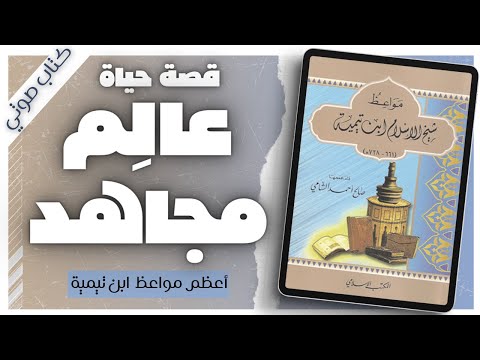
1:21:13

4:16:05

3:08:18

2:34:47

2:42:37
1:26:22

8:17:55

3:24:34

3:44:29
3:22:02
3:31:21
2:25:53

5:06:15
5:17:35

2:59:43

3:02:41
3:46:00